What is Wolfram Syndrome?

What is Wolfram?
Wolfram Syndrome is a rare genetic disorder which causes a number of conditions which usually includes a type of diabetes (scientific name - diabetes mellitus) that is treated in the same way as type 1 diabetes but it's not the same and is a rare form of monogenic diabetes.
Most people with Wolfram Syndrome will develop diabetes. And half of them will also go on to develop another completely different condition called diabetes insipidus.
Wolfram Syndrome is also known as DIDMOAD syndrome after its four most common features (Diabetes Insipidus, Diabetes Mellitus, Optic Atrophy and Deafness).

Key features of Wolfram Syndrome
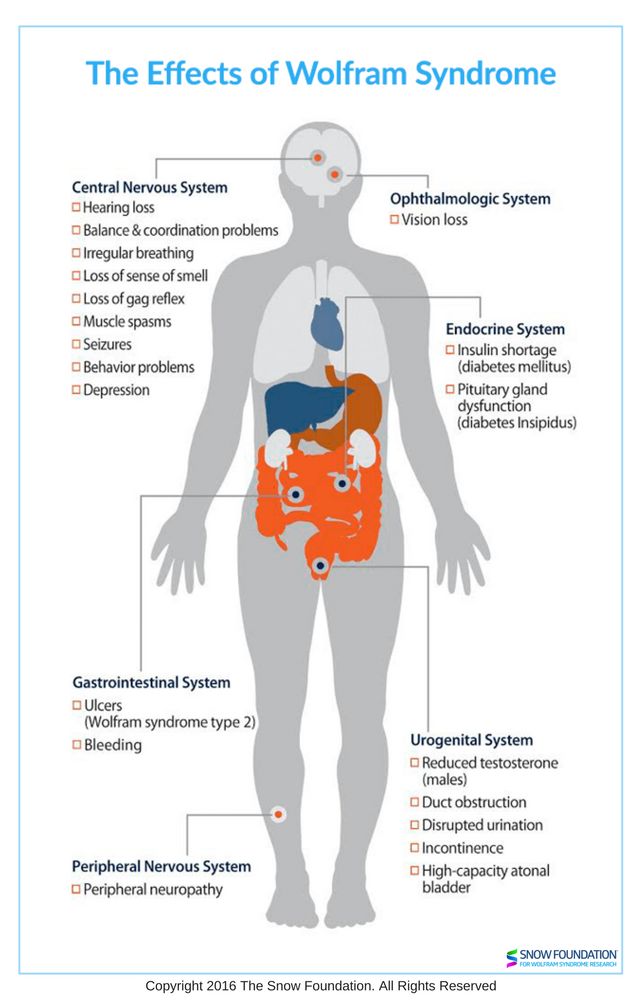
- Diabetes: This is a different type of diabetes than the more common type 1 as it’s not an autoimmune condition (where the body has destroyed the insulin producing cells). It is treated in the same way as type 1 diabetes with insulin injections, blood testing.
- Diabetes insipidus: This is where the body can’t concentrate urine because the posterior pituitary gland (found at the base of the brain) isn’t making enough of the hormone vasopressin. This means that you get very thirsty and need to pass urine frequently, and your urine is very dilute.
- Optic atrophy: This means that the optic nerve has wasted away and causes colour blindness and gradual loss of vision. Everyone with Wolfram Syndrome will have optic atrophy at some stage.
- Deafness: It can be difficult to hear high pitched sounds or to hear in a crowded room. About two thirds of people with Wolfram Syndrome will have hearing loss and about one in four of these will need a hearing aid.
- Renal problems: This can cause bedwetting, needing to pass urine frequently and loss of bladder control. Even when the symptoms of either type of diabetes are controlled, you can still get these symptoms, as they are caused by a problem with the renal tract. About two thirds of people with Wolfram Syndrome have renal problems.
- Neurological problems: These can include loss of balance, sudden muscle jerks, loss of taste and smell, breathing problems and depression. About a quarter of people with Wolfram Syndrome may have a mental health problem at some stage.
- Chronic fatigue: People with Wolfram Syndrome have a progressively declining levels of physical stamina. As this condition progresses they will need increasingly greater amounts of sleep.
Other features of Wolfram Syndrome include fertility problems and gastrointestinal problems causing constipation or diarrhoea.
There is no cure for WS.
While there is currently no cure, the research is rapidly advancing from understanding the disease to actively testing therapies. Clinical trials are taking place focusing on treatments to slow or stop it’s progression.